Showing posts with label Lyme disease. Show all posts

Thursday, December 4, 2014

Jailed for Lyme Disease. Really? Really.


Become a fan Award-winning professional photographer
 From Huff Post, Dec 4, 2014
 Posted: Updated:


We've all heard this before, and many of us know it firsthand to be true. Disease is unfair, and it strikes us without warning or discretion. Yet there is one thing we have come to expect from living in the United States -- that the medical and legal systems are here to support us all equally and fairly. Sounds great in theory, but when put to the test, if you're a round peg, good luck fitting in the square hole.

Wednesday, December 3, 2014

Implants to stop Lyme disease??

MEDFORD/SOMERVILLE, Mass. (Nov. 24, 2014) -- Researchers at Tufts University, in collaboration with a team at the University of Illinois at Champaign-Urbana, have demonstrated a resorbable electronic implant that eliminated bacterial infection in mice by delivering heat to infected tissue when triggered by a remote wireless signal.  The silk and magnesium devices then harmlessly dissolved in the test animals. The technique had previously been demonstrated only in vitro. The research is published online in the Proceedings of the National Academy of Sciences Early Edition the week of November 24-28, 2014.

"This is an important demonstration step forward for the development of  on-demand medical devices that can be turned on remotely to perform a therapeutic function in a patient and then safely disappear after their use, requiring no retrieval," said senior author Fiorenzo Omenetto, professor of biomedical engineering and Frank C. Doble professor at Tufts School of Engineering. "These wireless strategies could help manage post-surgical infection, for example, or pave the way for eventual 'wi-fi' drug delivery."

- See more at: http://now.tufts.edu/news-releases/wireless-electronic-implants-stop-staph-then-harmlessly-dissolve#sthash.v11NNMZp.dpuf

Friday, May 30, 2014

New Test for Lyme from George Mason Univ.

Health

New Test Shows Potential for Detecting Active Cases of Lyme Disease

By Michele McDonald

Alessandra Luchini

Worried that tick bite means Lyme disease? Mason researchers can find the answer well before the bite victim begins to show symptoms.

"If you are bit by a tick, you can't be sure if you will get Lyme disease―that is the biggest problem right now," says Mason researcher Alessandra Luchini of the Center for Applied Proteomics and Molecular Medicine.

Luchini and other Mason researchers are evaluating a new type of diagnostic test they developed for humans and their canine pals to pinpoint tiny signs of the bacteria that lead to Lyme disease. A study of the new type of test is underway. The test soon could be available commercially through privately held Ceres Nanosciences Inc., which partnered with Mason to develop the test and plans to market it to doctor's offices and veterinary clinics.

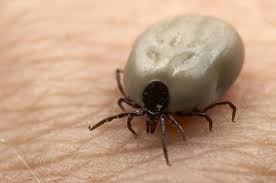
The culprit is the blacklegged tick. It can carry the bacterium Borrelia burgdorferi, which leads to Lyme disease. To make matters worse, nymphs―about the size of the period at the end of this sentence―can bite unnoticed until the standard first sign of Lyme disease, a bull's-eye rash, appears.

Joint and muscle aches, fatigue, fever, chills, headaches, and swollen lymph nodes typically come next, according to the Centers for Disease Control and Prevention.

Center for Proteomics and Molecular Medicine researchers Claudius Mueller and Lance Liotta in the lab. Photo by Creative Services.

A dose of antibiotics usually kills the bacteria, but sometimes symptoms persist. Patients return to their doctor months and even years later, convinced they still have Lyme disease, says Lance Liotta, the co-director of the center. Until now, there was no way of knowing definitively if the disease was still active or not.

Current blood tests only show if the body has created antibodies to fight the infection. Antibodies remain even after the infection is beaten.

But the active Lyme disease bacterium sheds a very small piece of itself called an antigen while it's doing damage. In the past, these nanoparticles were too small to test. But thanks to technology developed at center, researchers can now use a "nanotrap" to capture the antigen in urine.

The patented nanotrap works much like a lobster trap, Liotta says. It's an open meshwork with bait inside. The traps look like tiny white balls under the microscope. "The protein that we want goes in and gets stuck inside," Liotta says. "It binds to that bait in the trap."

The researcher plucks out the antigen, which is protected while in the trap. If the antigen shed byBorrelia burgdorferi is found, then the patient has an active case of Lyme disease, Luchini says.

"The antigen is a component of the toxic-causing agent itself," Luchini says. "Instead of looking at the host response or whatever the human body does to fight the infection, we look at a piece of the infection-causing agent. Everyone measures the antibodies because it's much easier."

And it's those antibodies that can cause problems, Liotta says. Antibodies fight infection and react to the proteins in the bacteria. But antibodies don't stop with the infection—they move to attack proteins in the nerves, joints, and brain, Liotta says.

"The bacterium doesn't directly cause the damage," Liotta says. "It's the immune response that's doing the damage. The goal is to have a way to detect Lyme disease even before you make antibodies against it. Then you could treat the patient with antibiotics, and they wouldn't get all those terrible symptoms. Or, if someone has joint problems and they're convinced they have Lyme disease—and there are thousands of people who feel that way—it gives us a way to definitively say they do or don't have Lyme disease."

The inspiration for the test started about two and a half years ago when a high school student from Lucketts, Virginia, joined Mason's Aspiring Scientists Summer Internship Program and worked with Luchini and Liotta. Temple Douglas, now a junior at Princeton University, had family members who suffered from Lyme disease.

She even collected the first round of ticks for the initial work on the test. "I lived in the countryside, so whenever people found ticks on their animals or crawling on their pants after they went hiking, I would take them with me to the lab," Douglas says.

Ceres Nanosciences raised $1 million late last year, due in large part to the commercial potential of the Lyme disease diagnostic test, says Ross Dunlap, its chief executive officer. The results could do more than boost the company's bottom line, he says.

"It would be good not to be flooding every tick bite with antibiotics," Dunlap says.

Monday, May 26, 2014

More press on IDSA "Mayday" protest

Lyme Warriors Call for Congressional Investigation of CDC, IDSA, Vaccine Makers


By PR Newswire: Biotechnology    

Friday, 23 May 2014 05:00


ARLINGTON, Va., May 23, 2014 /PRNewswire/ -- Lyme activists, who have the Infectious Diseases Society of America headquarters surrounded and under siege, issued a call for a Congressional Investigation of corruption within the CDC, IDSA, and the vaccine industry.


According to Lyme researcher and activist, Carl Tuttle, "An investigation is long overdue. The conflicts of interest and improper influence among these originations has contributed to terrible suffering and financial losses for thousands of people."


Tuttle suffered from Lyme disease for twelve years and was misdiagnosed and denied treatment by multiple doctors before he was finally diagnosed with late stage Lyme disease. Despite receiving the IDSA recommended treatment, Tuttle remained ill and was bedridden on oxygen for several months.


New York Times bestselling author Dr. Joseph Mercola says, "Conflicts of interest are rampant in the vaccination infrastructure. The same people who are regulating and promoting vaccines are also evaluating vaccine safety."


In November 2006, Connecticut Attorney General Richard Blumenthal, now a U.S. Senator, launched an investigation of IDSA based on allegations of abuses of monopoly power and exclusionary conduct in the development of their guidelines, in violation of antitrust law.


In a May 2008 press release Blumenthal said, "My office uncovered undisclosed financial interests held by several of the most powerful IDSA panelists. The IDSA's guideline panel improperly ignored or minimized consideration of alternative medical opinion and evidence regarding chronic Lyme disease, potentially raising serious questions about whether the recommendations reflected all relevant science."


IDSA has consistently opposed patient-centered legislation. At IDSA's 2006 annual meeting "Defeat Patient Sponsored Legislation" was a top agenda item.


Mayday Project coordinator Josh Cutler is concerned about the adversarial relationship between the IDSA and patients. He says, "IDSA's response to the epidemic of chronic Lyme disease is to pretend it doesn't exist. Thousands of people suffer as a result. Instead of working for the benefit of patients, IDSA works to block legislation that would help patients."


In April 2014 Senator Bill Posey (R-FL) called for a Congressional investigation into conflicts of interests and corruption within the CDC and vaccine industry. Posey described "Huge conflicts of interest and a misinformation campaign conducted on behalf of the CDC. Their little media network twist[s] the truth to disparage, to malign, to vilify, to denigrate anybody who wants any kind of accountability."


Sources:

http://www.biomedreports.com/20140523182513/lyme-warriors-call-for-congressional-investigation-of-cdc-idsa-vaccine-makers.html


For more information visit www.themaydayproject.org


Press Release Contact Information:

Susan Harris

Media Relations

TeamCom

301-545-0808

seharris4@verizon.net


This release was issued through WebWire®. For more information visit http://www.webwire.com.


Press Release URL:

http://www.webwire.com/ViewPressRel.asp?aId=188062


SOURCE Mayday Project


RELATED LINKS

http://www.themaydayproject.org

Read more http://www.prnewswire.com/news-releases/lyme-warriors-call-for-congressional-investigation-of-cdc-idsa-vaccine-makers-260391261.html


Monday, February 17, 2014

KPFA series of Radio shows on Lyme - updated yet again

Dennis Bernstein (host of Flashpoints on Pacifica Radio Network),  and Jessica Bernstein (no relation, doctor of psychology) have put together a powerful series of radio shows about Lyme disease and the political and health entanglements, implications and current research in the field. The stories are moving, informative, up to date, and alarming. I encourage anyone interested in public health to listen to these, whether you are a health-care provider, researcher, Lyme patient, or healthy citizen. These shows will explain the controversy over Lyme detection, prevention, treatment, insurance coverage, and more.

Here are descriptions and links to the past shows if you'd like to check them out:

1. Dr. Jessica Bernstein and Dr. Marc Conant – who was at the forefront of the AIDS movement – discussed the parallels between the way the federal government handled the AIDS epidemic and how they're handling the Lyme epidemic: http://www.kpfa.org/archive/id/99148

2. Writer Amy Tan discussed her experience with neurological Lyme disease and Bay Area Lyme expert Dr. Steven Harris explained what Lyme disease is and why it's so difficult to treat. The Amy Tan interview was on of the most powerful in the series to date: http://www.kpfa.org/archive/id/99376

3. Microbiologist Tom Grier discussed how people with Lyme are being misdiagnosed with MS and Dr. Alan McDonald discussed how they're being misdiagnosed with Alzheimer's:http://www.kpfa.org/archive/id/99572

4. Lyme Expert Dr. Ray Stricker (Amy Tan's doctor) and Marianne Middelveen discussed their latest study conducted by an international group of scientists indicating that Lyme disease may be sexually transmitted. Then filmmaker Andy Abrahams Wilson who directed the Lyme documentary, "Under Our Skin" was interviewed. Andy explained some of politics that are interfering with Lyme patients receiving treatment http://www.kpfa.org/archive/id/99786

5. Dr. Richard Horowitz, author of "Why Can't I Get Better?" is an amazingly articulate speaker. His conversation with Dennis is chock-full of statistics and useful information for anyone interested in Lyme disease, whether they have it or not. His estimations of the number of people with Lyme disease is staggering. It's clear from the scientific research that he cites, and from his experience with over 12,000 Lyme disease patients that we are truly looking at an epidemic, with most likely one to two million infected US citizens. This is a must listen, if you have any interest in Lyme disease: https://www.kpfa.org/archive/id/99859

6. Hear Dennis Bernstein interviewing director David France of, "How to Survive a Plague."  David has been deeply entrenched in AIDS activism for the past 30 years but got neurological Lyme during the height of the AIDS crisis so presents a unique perspective about the parallels and differences. check out the amazing interview in the archives: https://www.kpfa.org/archive/id/100253

7. U.C. Berkeley researcher Bob Lane discussed his extensive research on the prevalence of Lyme disease in California that he has been conducting over the past 30 years: http://www.kpfa.org/archive/id/101114

8. This show covered the recent Lyme disease protest of the Infectious Diseases Society of America (IDSA). Protest organizer Josh Cutler discussed the reason for the protest and the reaction to their efforts:http://www.kpfa.org/archive/id/103052. The protest was also covered by Fox 5 news:http://www.youtube.com/watch?v=ctWWTUZcL2c

9. Filmmaker Sini Anderson discussed Lyme from a feminist perspective. After her Lyme diagnosis, she began noticing just how many women have late-stage Lyme disease and in particular women in the feminist community. She discussed her latest film (in production) about feminists with late-stage Lyme disease:http://www.kpfa.org/archive/id/103653

10. 

lymKPFA continues their groundbreaking investigation into the Lyme disease epidemic, with a hard hitting three part series about the failure of government agencies to address this health crisis, the widespread under-reporting of the epidemic and a new kind of activism that’s emerging from sick patients who have been crippled by the disease. Also, we’ll be joined by Barbara Lubin of the Middle East Children’s Alliance, for an update on Gaza and information on an upcoming event.

Click on the link below to listen to the show

Monday, February 3, 2014

Early Lyme disease with spirochetemia - diagnosed by DNA sequencing

Early Lyme disease with spirochetemia - diagnosed by DNA sequencing

Abstract

Background

A sensitive and analytically specific nucleic acid amplification test (NAAT) is valuable in confirming the diagnosis of early Lyme disease at the stage of spirochetemia.

Findings

Venous blood drawn from patients with clinical presentations of Lyme disease was tested for the standard 2-tier screen and Western Blot serology assay for Lyme disease, and also by a nested polymerase chain reaction (PCR) for B. burgdorferi sensu lato 16S ribosomal DNA. The PCR amplicon was sequenced for B. burgdorferi genomic DNA validation. A total of 130 patients visiting emergency room (ER) or Walk-in clinic (WALKIN), and 333 patients referred through the private physicians' offices were studied. While 5.4% of the ER/WALKIN patients showed DNA evidence of spirochetemia, none (0%) of the patients referred from private physicians' offices were DNA-positive. In contrast, while 8.4% of the patients referred from private physicians' offices were positive for the 2-tier Lyme serology assay, only 1.5% of the ER/WALKIN patients were positive for this antibody test. The 2-tier serology assay missed 85.7% of the cases of early Lyme disease with spirochetemia. The latter diagnosis was confirmed by DNA sequencing.

Conclusion

Nested PCR followed by automated DNA sequencing is a valuable supplement to the standard 2-tier antibody assay in the diagnosis of early Lyme disease with spirochetemia. The best time to test for Lyme spirochetemia is when the patients living in the Lyme disease endemic areas develop unexplained symptoms or clinical manifestations that are consistent with Lyme disease early in the course of their illness.

Read the whole study:

Sunday, January 26, 2014

Lyme Disease May Be Sexually Transmitted, Study Suggests

International team of scientists finds evidence for sexual transmission.

Carmel, CA (PRWEB) January 25, 2014 

A new study suggests that Lyme disease may be sexually transmitted. The study was presented at the annual Western Regional Meeting of the American Federation for Medical Research, and an abstract of the research was published in the January issue of the Journal of Investigative Medicine.

Lyme Disease -Induced Polyradiculopathy Mimicking ALS--Amyotrophic Lateral Sclerosis.

Lyme Disease -Induced Polyradiculopathy Mimicking ALS -- Amyotrophic Lateral Sclerosis.

Author information:

Burakgazi, A.Z.
Assistant Professor, Neuroscience Section, Department of Medicine, Virginia Tech Carilion School of Medicine, Roanoke, VA, USA.

Int J Neurosci. 2014 Jan 7. [Epub ahead of print]

Sunday, December 22, 2013

Poughkeepsie Journal to report on Lyme carditis deaths


I received this in my email today and wanted to pass it along. -Bob


Dear Friends and Associates,

Please share this with others.

Last week the CDC announced  information about deaths due to Lyme Carditis:
http://www.cdc.gov/lyme/signs_symptoms/lymeCarditis.html

Once again Mary Beth Pfeiffer (of the Poughkeepsie Journal (http://www.poughkeepsiejournal.com/) is following up on this with a story which is so important for awareness of both physicians and residents!

Although the CDC reports this as rare at 1%, it may be more common than that. Even if only 1% that is at least 3,000 people when there are over 300,000 a year who contract Lyme disease. We need our medical community on heightened awareness to save unnecessary fatalities.

Additionally, 17 year old honor student Joseph Elone's death attributed to tick-borne disease was front page news in this region in Aug. and Sept. Then we heard nothing more. I hope Mary Beth has an answer for us about what happened to him. If it was Lyme disease, the BIG question we will never know, would his death have been avoided by treatment? Joesph lies in a grave, perhaps a tragedy that could have been avoided for him and his grieving family!

Thanks to the CDC and Mary Beth for bringing awareness to this serious symptom caused by the Lyme spirochete! Let's save lives and let's get these cases reported so we know the true incidence of sudden death from Lyme carditis!

Get Monday's newspaper or online version. Thank the reporter by recommending and commenting. Much gratitude to the CDC for bringing awareness to this!

I always have to add: It is well past time for our government to focus on serious research to reduce tick numbers or STOP their ability to transmit disease pathogens to us (Such research is no longer funded by the NIH. Does that make any common sense? No, of course not!)

Wishing you all the Joys of the Holidays and a Happy, HEALTHIER New Year!

Jill Auerbach
Hudson Valley Lyme Disease Association, Chairperson
Dutchess County Legislative Task Force on Tick and Lyme Disease Reduction, Member
Stop Ticks On People (S.T.O.P.), Board Member
"What's the problem? Well it's the ticks of course!"
PS: If the story does not cover all the other links about this. I will follow up with additional information the CDC sent to myself and others on this topic.

Wednesday, December 18, 2013

Critique of potential upcoming Lyme vaccine


Important reading about probable upcoming Lyme vaccination

Lyme disease vaccination: safety first


In the Article by Nina Wressnigg and colleagues1 and the related Comment by Paul Lantos2 describing a novel Lyme vaccine, the authors attempt to avoid discussion of the side-effects of the previous Lyme vaccine, LYMErix (SmithKline Beecham, Pittsburgh, USA). This approach to safety issues bodes ill for the new Lyme vaccine candidate.

LYMErix was put on the market in 1998 and withdrawn by the manufacturer in 2002, ostensibly because of poor sales. However, the so-called poor sales were related to safety concerns raised in a class-action lawsuit by more than 400 patients who claimed that they developed Lyme-like symptoms after vaccination with LYMErix.3, 4 Subsequent studies showed that outer surface protein A (OspA), the antigenic component of Borrelia burgdorferi used to create both LYMErix and the new candidate vaccine, induced joint-reactive and nerve-reactive antibodies in animals and human beings vaccinated with the protein antigen.3—6  

Even more disturbing, other studies indicated that LYMErix induced reactivity against multiple target antigens that were never characterised, and these studies called into question the OspA specificity of the vaccine.7, 8 By withdrawing LYMErix when it did, the manufacturer avoided releasing phase 4 post-marketing data that probably would have shown increased side-effects related to the vaccine.9 The data have never been disclosed, and this lack of disclosure has fostered persistent patient mistrust of Lyme vaccine manufacturers.

Wressnigg and colleagues provide minimum safety data about the new OspA-based Lyme vaccine, whereas Lantos glosses over the "largely unsubstantiated safety concerns" about LYMErix. Adoption of this view by Lyme vaccine manufacturers, regulators, and promoters has shaken patient confidence in Lyme vaccines despite the fact that this patient population is generally pro-vaccination.10 Any new Lyme vaccine will need extensive safety testing, more transparency about side-effects, and improved patient communication on the part of the vaccine manufacturer to allay valid patient concerns about safety.4, 10 Let's hope that history does not repeat itself because Lyme vaccine manufacturers, regulators, and promoters once again underestimate or ignore justified patient concerns about Lyme vaccination risks.

RBS serves without compensation on the medical advisory panel of QMedRx Inc. He has no financial ties to the company. LJ declares that she has no conflicts of interest.

References

1 Wressnigg N, Pöllabauer E-M, Aichinger G, et al. Safety and immunogenicity of a novel multivalent OspA vaccine against Lyme borreliosis in healthy adults: a double-blind, randomised, dose-escalation phase 1/2 trial. Lancet Infect Dis 2013; 13: 680-689.Summary | Full Text | PDF(256KB) | CrossRef | PubMed
2 Lantos PM. Lyme disease vaccination: are we ready to try again?. Lancet Infect Dis 2013; 13: 643-644. Full Text | PDF(94KB) |CrossRef | PubMed
3 Stricker RB. Lymerix risks revisited. Microbe 2008; 3: 1-2. PubMed
4 Smith P, Gaito A, Marks DH. Transcript of FDA Lymerix meeting, BethesdaMD.http://www.lymediseaseassociation.org/index.php?option=com_content&view=article&id=532: lymerix-meeting&catid=129: hhsfood-a-drug-administration-fda&Itemid=531. (accessed Nov 29, 2013).
5 Souayah N, Ajroud-Driss S, Sander HW, Brannagan TH, Hays AP, Chin RL. Small fiber neuropathy following vaccination for rabies, varicella or Lyme disease. Vaccine 2009; 27: 7322-7325. CrossRef | PubMed
6 Marks DH. Neurological complications of vaccination with outer surface protein A (OspA). Int J Risk Saf Med 2011; 23: 89-96.PubMed
7 Molloy PJ, Berardi VP, Persing DH, Sigal LH. Detection of multiple reactive protein species by immunoblotting after recombinant outer surface protein A Lyme disease vaccination. Clin Infect Dis 2000; 31: 42-47. CrossRef | PubMed
8 Fawcett PT, Rose CD, Budd SM, Gibney KM. Effect of immunization with recombinant OspA on serologic tests for Lyme borreliosis. Clin Diagn Lab Immunol 2001; 8: 79-84. PubMed
9 Nardelli DT, Munson EL, Callister SM, Schell RF. Human Lyme disease vaccines: past and future concerns. Future Microbiol2009; 4: 457-469. CrossRef | PubMed
10 Smith P. Remarks to Vaccines and Related Biological Products Advisory Committee, BethesdaMD.http://www.lymediseaseassociation.org/index.php?option=com_content&view=article&id=262: vaccine-remarks&catid=80: controversy&Itemid=76. (accessed Nov 29, 2013).

Response from the development team:
Lyme disease vaccination: safety first — Authors' reply

We refute the assertion by Raphael Stricker and Lorraine Johnson that we avoided discussion of the side-effects of the previously licensed Lyme vaccine, LYMErix, in our report of a novel multivalent candidate vaccine against Lyme borreliosis.1 In our introduction, we provide a full and balanced description of the hypothesised safety concerns associated with the monovalent outer surface protein A (OspA) vaccine LYMErix, and we present and discuss in detail the safety data generated in our phase 1/2 trial of the new multivalent vaccine.  


Conflict of interest statement:
All authors are employees of Baxter. PNB, BAC, NW, and GA own stock and share options in Baxter, and have planned, pending, or issued patents for Lyme vaccines.