Tuesday, July 18, 2017


Sunday, July 9, 2017
Canadian review of existing Lyme vaccines
Bob
•••••••••••••••••••••••••••••••••••••••••••••
Bob Cowart
Email: bob@cowart.com
Phone: 510-540-6667
Technical Books: http://www.amazon.com/Robert-Cowart/e/B001HOJ3ZQ
Lyme blog: http://bobcowart.blogspot.com
Facebook: bcowart1
Twitter: @bobcowart
Wednesday, July 5, 2017
Parkinson's is partly an autoimmune disease
Parkinson's is partly an autoimmune disease
 Researchers have found the first direct evidence that autoimmunity -- in which the immune system attacks the body's own tissues -- plays a role in Parkinson's disease, the neurodegenerative movement disorder. The findings raise the possibility that the death of neurons in Parkinson's could be prevented by therapies that dampen the immune response.
The study, led by scientists at Columbia University Medical Center (CUMC) and the La Jolla Institute for Allergy and Immunology, was published today in Nature.
"The idea that a malfunctioning immune system contributes to Parkinson's dates back almost 100 years," said study co-leader David Sulzer, PhD, professor of neurobiology (in psychiatry, neurology and pharmacology) at CUMC. "But until now, no one has been able to connect the dots. Our findings show that two fragments of alpha-synuclein, a protein that accumulates in the brain cells of people with Parkinson's, can activate the T cells involved in autoimmune attacks.
"It remains to be seen whether the immune response to alpha-synuclein is an initial cause of Parkinson's, or if it contributes to neuronal death and worsening symptoms after the onset of the disease," said study co-leader Alessandro Sette, Dr. Biol. Sci., professor in the Center for Infectious Disease at La Jolla Institute for Allergy and Immunology in La Jolla, Calif. "These findings, however, could provide a much-needed diagnostic test for Parkinson's disease, and could help us to identify individuals at risk or in the early stages of the disease."
Scientists once thought that neurons were protected from autoimmune attacks. However, in a 2014 study, Dr. Sulzer's lab demonstrated that dopamine neurons (those affected by Parkinson's disease) are vulnerable because they have proteins on the cell surface that help the immune system recognize foreign substances. As a result, they concluded, T cells had the potential to mistake neurons damaged by Parkinson's disease for foreign invaders.
The new study found that T cells can be tricked into thinking dopamine neurons are foreign by the buildup of damaged alpha-synuclein proteins, a key feature of Parkinson's disease. "In most cases of Parkinson's, dopamine neurons become filled with structures called Lewy bodies, which are primarily composed of a misfolded form of alpha-synuclein," said Dr. Sulzer.
In the study, the researchers exposed blood samples from 67 Parkinson's disease patients and 36 age-matched healthy controls to fragments of alpha-synuclein and other proteins found in neurons. They analyzed the samples to determine which, if any, of the protein fragments triggered an immune response. Little immune cell activity was seen in blood samples from the controls. In contrast, T cells in patients' blood samples, which had been apparently primed to recognize alpha-synuclein from past exposure, showed a strong response to the protein fragments. In particular, the immune response was associated with a common form of a gene found in the immune system, which may explain why many people with Parkinson's disease carry this gene variant.
Dr. Sulzer hypothesizes that autoimmunity in Parkinson's disease arises when neurons are no longer able to get rid of abnormal alpha-synuclein. "Young, healthy cells break down and recycle old or damaged proteins," he said. "But that recycling process declines with age and with certain diseases, including Parkinson's. If abnormal alpha-synuclein begins to accumulate, and the immune system hasn't seen it before, the protein could be mistaken as a pathogen that needs to be attacked."
The Sulzer and Sette labs are now analyzing these responses in additional patients, and are working to identify the molecular steps that lead to the autoimmune response in animal and cellular models.
"Our findings raise the possibility that an immunotherapy approach could be used to increase the immune system's tolerance for alpha-synuclein, which could help to ameliorate or prevent worsening symptoms in Parkinson's disease patients," said Dr. Sette.
Journal Reference
The study, led by scientists at Columbia University Medical Center (CUMC) and the La Jolla Institute for Allergy and Immunology, was published today in Nature.
"The idea that a malfunctioning immune system contributes to Parkinson's dates back almost 100 years," said study co-leader David Sulzer, PhD, professor of neurobiology (in psychiatry, neurology and pharmacology) at CUMC. "But until now, no one has been able to connect the dots. Our findings show that two fragments of alpha-synuclein, a protein that accumulates in the brain cells of people with Parkinson's, can activate the T cells involved in autoimmune attacks.
"It remains to be seen whether the immune response to alpha-synuclein is an initial cause of Parkinson's, or if it contributes to neuronal death and worsening symptoms after the onset of the disease," said study co-leader Alessandro Sette, Dr. Biol. Sci., professor in the Center for Infectious Disease at La Jolla Institute for Allergy and Immunology in La Jolla, Calif. "These findings, however, could provide a much-needed diagnostic test for Parkinson's disease, and could help us to identify individuals at risk or in the early stages of the disease."
Scientists once thought that neurons were protected from autoimmune attacks. However, in a 2014 study, Dr. Sulzer's lab demonstrated that dopamine neurons (those affected by Parkinson's disease) are vulnerable because they have proteins on the cell surface that help the immune system recognize foreign substances. As a result, they concluded, T cells had the potential to mistake neurons damaged by Parkinson's disease for foreign invaders.
The new study found that T cells can be tricked into thinking dopamine neurons are foreign by the buildup of damaged alpha-synuclein proteins, a key feature of Parkinson's disease. "In most cases of Parkinson's, dopamine neurons become filled with structures called Lewy bodies, which are primarily composed of a misfolded form of alpha-synuclein," said Dr. Sulzer.
In the study, the researchers exposed blood samples from 67 Parkinson's disease patients and 36 age-matched healthy controls to fragments of alpha-synuclein and other proteins found in neurons. They analyzed the samples to determine which, if any, of the protein fragments triggered an immune response. Little immune cell activity was seen in blood samples from the controls. In contrast, T cells in patients' blood samples, which had been apparently primed to recognize alpha-synuclein from past exposure, showed a strong response to the protein fragments. In particular, the immune response was associated with a common form of a gene found in the immune system, which may explain why many people with Parkinson's disease carry this gene variant.
Dr. Sulzer hypothesizes that autoimmunity in Parkinson's disease arises when neurons are no longer able to get rid of abnormal alpha-synuclein. "Young, healthy cells break down and recycle old or damaged proteins," he said. "But that recycling process declines with age and with certain diseases, including Parkinson's. If abnormal alpha-synuclein begins to accumulate, and the immune system hasn't seen it before, the protein could be mistaken as a pathogen that needs to be attacked."
The Sulzer and Sette labs are now analyzing these responses in additional patients, and are working to identify the molecular steps that lead to the autoimmune response in animal and cellular models.
"Our findings raise the possibility that an immunotherapy approach could be used to increase the immune system's tolerance for alpha-synuclein, which could help to ameliorate or prevent worsening symptoms in Parkinson's disease patients," said Dr. Sette.
Journal Reference
- David Sulzer, Alessandro Sette et al. T cells of Parkinson's disease patients recognize alpha-synuclein peptides. Nature, 2017 DOI: 10.1038/nature22815
Tuesday, July 4, 2017
Man With Parkinson’s Takes On ‘American Ninja Warrior’ Course,
Inspiring.
Bob
•••••••••••••••••••••••••••••••••••••••••••••
Bob Cowart
Email: bob@cowart.com
Phone: 510-540-6667
Technical Books: http://www.amazon.com/Robert-Cowart/e/B001HOJ3ZQ
Lyme blog: http://bobcowart.blogspot.com
Facebook: bcowart1
Twitter: @bobcowart
Monday, June 26, 2017
Natural Bug Spray: Jane Marke's Blog Post at LymeCareNow
To Friends, Family, Patients:
A Lyme doctor and researcher posted this recently on her blog and I wanted to share it with you. It's about natural insect repellants that she claims are effective against Lyme.
-Bob
It's tick and mosquito season, and everybody is concerned about bite-prevention. Many of you share my concerns about using DEET in the quantities that might be necessitated by our exposure, or our chldren's exposure to tick-invested grasslands. DEET works, but it's best to limit our use of it.
So I've done some research into natural oils and natural bug repellents, and posted the results on my LymeCareNow website, including advice for DIY recipes. You can access it directly at:

Five studies and articles about Chronic Lyme Disease (CLD)
Evidence assessments and guideline recommendations in Lyme disease: the clinical management of known tick bites, erythema migrans rashes and persistent disease.
https://www.ncbi.nlm.nih.gov/pubmed/25077519
Proof that chronic lyme disease exists.
https://www.ncbi.nlm.nih.gov/pubmed/20508824
Insufficient evidence to deny antibiotic treatment to chronic Lyme disease patients.
https://www.ncbi.nlm.nih.gov/pubmed/19268485
Clinical trials validate the severity of persistent Lyme disease symptoms.
https://www.ncbi.nlm.nih.gov/pubmed/19013025
AND Most Notably:
Generalizability in two clinical trials of Lyme disease.
https://www.ncbi.nlm.nih.gov/pubmed/17044928
Friday, June 23, 2017
Tick attachment times for Lyme to be transmitted to humans
This was sent to me today from a Lyme researcher:
Hello All,
I stumbled upon an interview with Willy Burgdorfer from the NIH archives. The quote below is about tick attachment times needed to transmit infection is from the bottom of page 55.
Studies done so far suggest that it takes about two days of attachment and feeding before spirochetes are being transmitted to a host animal. This is referred to as the "safety period," during which a person could remove a tick without becoming infected. I personally don't subscribe to this theory, because there are about 5 to 10 percent of infected ticks that have a generalized infection, including salivary glands and saliva at the time of attachment. In such cases, transmission of spirochetes would and does occur immediately at time of attachment.
There is much information at that link above.
Saturday, June 17, 2017
Does Parkinson's disease begin in the gut?
© chombosan/Shutterstock
The new study shows that a protein in nerve cells that becomes corrupted and then forms clumps in the brains of people with Parkinson's can also be found in cells that line the small intestine. The research was done in both mice and human cells.
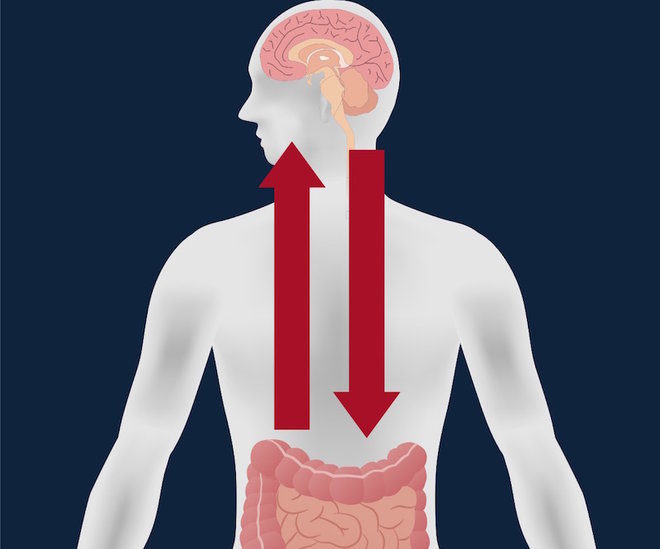
The finding supports the idea that this protein first becomes altered in the gut and then travels to the brain, where it causes the symptoms of Parkinson's disease.
Parkinson's disease is a progressive movement disorder, affecting as many as 1 million people in the United States and 7 million to 10 million people worldwide, according to the Parkinson's Disease Foundation.
The protein, called alpha-synuclein, is abundant in the brain. And in healthy nerve cells, it dissolves in the fluid within the cell. But in Parkinson's patients, alpha-synuclein folds abnormally. The misfolded protein can then spread through the nervous system to the brain as a prion, or infectious protein. In the brain, the misfolded protein molecules stick to each other and clump up, damaging neurons.
In 2005, researchers reported that people with Parkinson's disease who had these clumps in their brains also had the clumps in their guts. Other research published this year looked at people who had ulcers and who underwent a surgery that removed the base of the vagus nerve, which connects the brain stem to the abdomen. These patients had a 40 percent lower risk of developing Parkinson's later in life compared with people who didn't have their vagus nerve removed.
Both findings suggested the prion may originate in the gut.
But one puzzle remained: how the proteins that became altered in the gut could spread to the brain. The protein had been found in the lumen, or the space inside the gastrointestinal tract, but "nerves are not open to the lumen," said gastroenterologist Dr. Rodger Liddle, senior author of the new paper, appearing today (June 15) in the journal JCI Insight, and professor of medicine at Duke University in North Carolina.
A key clue to how the protein may move from the lumen into nerve cells came in 2015. Liddle's team discovered cells in the lining of the small intestine that "acted a lot like nerve cells," Liddle said. The cells were endocrine cells, meaning they produce hormones, but they contained neurotransmitters and other proteins normally found in neurons. These cells even appeared to branch out in a similar way that neurons do, to communicate.
When placed near neurons, these endocrine cells behaved a lot like neurons - the endocrine cells moved toward the neurons, and fibers sprouted between the cells, connecting them, Liddle said. The process was captured in a time-lapse video featured in the 2015 study in the Journal of Clinical Investigation.
"It was only afterwards that we started putting these things together — these cells have a lot of nerve-like properties, [so] let's see if they also contain alpha-synuclein. And if they do, maybe they could be the source of Parkinson's disease," Liddle told Live Science.
Now that Liddle's team has shown that the endocrine cells do, in fact, contain the alpha-synuclein protein, the researchers want to establish that the endocrine cells of Parkinson's patients carry the malformed version of the protein, Liddle said.
If they can establish that, Liddle said, they can envision how the corrupted proteins causing Parkinson's disease could spread from the gut lining to the brain, possibly via the vagus nerve.
Previous research has shown that people exposed to certain pesticides and bacteria are more likely to get Parkinson's. Liddle said that one possibility is that these agents may affect the nerve-like endocrine cells in the gut, altering the structure of the alpha-synuclein protein inside the gut cells.
"Maybe it's bacteria, maybe a toxin that people ingest. Maybe they affect the endocrine cell and that corrupts the alpha-synuclein protein, and that spreads from the cell to the vagus nerve to the brain," Liddle told Live Science.
For now, many "maybe's" remain. But if further research supports the hypothesis, it could point the way to new ways to diagnose Parkinson's disease early on, as well as to new approaches to treatment, Liddle said.
"It's possible that if it starts in the gut, then you could create treatments that prevent abnormal alpha-synuclein formation in these cells," Liddle said. "It's possible you could develop dietary ways of treating those cells because those cells are lining the intestine. At this point, it's difficult to imagine, but we will see."
Comment: A low carb, ketogenic diet has been shown to be effective in decreasing the symptoms of Parkinson's disease:
In a small, uncontrolled study, five out of seven people with Parkinson's disease who completed a four-week ketogenic diet experienced a 43% improvement in self-reported symptomsSee also: Ketogenic Diet (high-fat, low-carb) Has Neuroprotective and Disease-modifying Effects
Thursday, June 15, 2017
Two videos and a PDF explaining how to do a "tick drag"
Performing a Tick Drag (video)
Published on Mar 11, 2014Ticks are a vector of a wide range of diseases worldwide. The proper technique for collecting ticks is important for vector surveillance.
Published on Jun 16, 2016 This video demonstrates the Active Tick Dragging: Standard Operating Procedure (SOP) is to standardize the methods used during tick dragging in Ontario.
Active Tick Dragging:Standard OperatingProcedure (PDF Text File with photos, no video)
https://www.publichealthontario.ca/en/eRepository/Active_tick_dragging_SOP.pdf (Same as above, but this address shows the exact URL.)
Bob
•••••••••••••••••••••••••••••••••••••••••••••
Bob Cowart
Email: bob@cowart.com
Blog: http://bobcowart.blogspot.com
Twitter: @bobcowart
•••••••••••••••••••••••••••••••••••••••••••••
Bob Cowart
Email: bob@cowart.com
Blog: http://bobcowart.blogspot.com
Twitter: @bobcowart
Tick Traps | Pesticides and Tick-Borne Diseases - Consumer Reports
Tick Traps Might Shield You From Pesticides and Tick-Borne Diseases
Consider using these 'bait boxes' if you're concerned about ticks where you live
Tick season is in full swing, and by many counts there's more to worry about this year than in past years.
The list of diseases that these vermin can carry has grown in recent years; the range across which they can thrive has also expanded. And according to at least some experts, this season will be a particularly bad one.
The threat has trapped homeowners between two worries: tick-borne diseases on the one hand and potentially dangerous pesticides on the other. Do you spray your yard and expose your family to potentially dangerous chemicals? Or take your chances with diseases like Lyme that can cause lifelong debilitation?
The rest of the story can be read on this page:
-Bob
•••••••••••••••••••••••••••••••••••••••••••••
Bob Cowart
•••••••••••••••••••••••••••••••••••••••••••••
Bob Cowart
Subscribe to:
Posts (Atom)
Comment: See also: